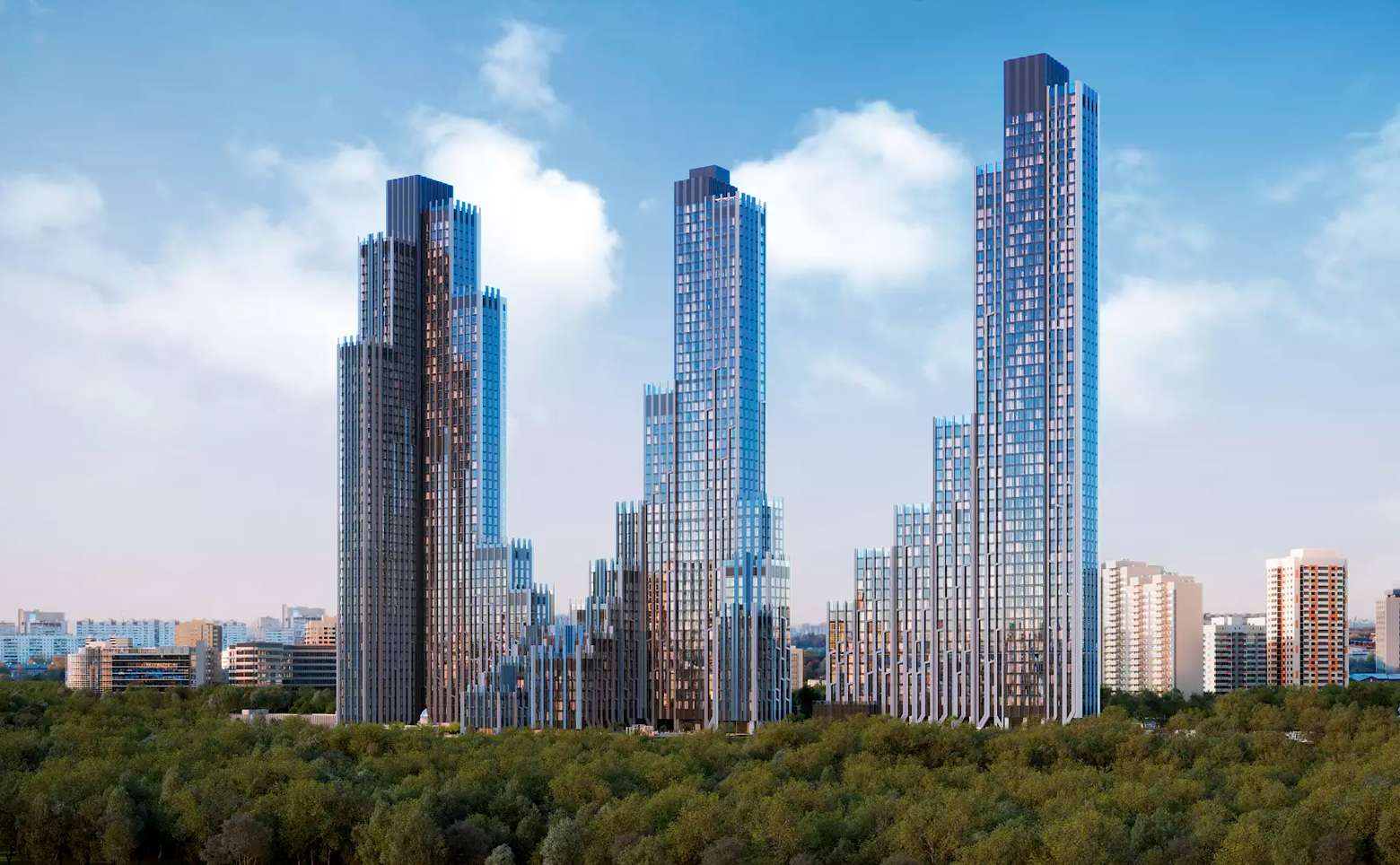
Russia intends to radically renew the country's housing stock, setting an ambitious goal: to build more than 1 billion square meters of new housing by 2030.
The government is maintaining the targets of the "Housing and Urban Environment" national project, which calls for the annual construction of 120 million square meters of housing. The exact timeframe for achieving this target will be clarified soon, but the overall direction of housing construction remains unchanged.
The program envisages that by 2030, the total amount of new housing in the country will exceed 1 billion square meters. Considering that Russia's current housing stock stands at 3.8 billion square meters, this means that within ten years, approximately one in five square meters of housing in the country will be newly built. The scale of this goal demonstrates the significant effort required to achieve it.
Deputy Prime Minister Marat Khusnullin, responsible for overseeing the "Housing and Urban Environment" national project, suggested a possible delay in its implementation. According to him, achieving these ambitious goals could require an additional two to three years. This statement comes amid the revision of Russia's national development goals through 2030. Initially, it was projected that by 2024, annual housing construction would reach 120 million square meters, with at least 5 million families benefiting from improved housing conditions. These significant targets have now been postponed.
Current housing construction statistics in Russia, however, do not inspire optimism about achieving even the initially planned targets. According to Rosstat, while 2019 saw an increase in construction volumes compared to the previous year (79.4 million square meters, up 4.9%), a decline was recorded in the first eight months of 2020. Only 39.3 million square meters of housing were commissioned, 7% less than in the same period in 2019. This trend calls into question the feasibility of meeting even the revised deadlines unless drastic measures are taken to stimulate the construction industry.
Therefore, postponing the deadlines for the national housing construction project appears logical in light of the existing challenges. The decline in housing completions this year indicates the presence of certain difficulties, be they economic factors, the impact of the pandemic, or other systemic issues. To achieve the ambitious plans announced by the president, it is necessary not only to adjust the timeframes but also to develop effective support mechanisms for the construction sector to ensure sustainable growth and a qualitative improvement in housing conditions for Russian families.
The government is maintaining the targets of the "Housing and Urban Environment" national project, which calls for the annual construction of 120 million square meters of housing. The exact timeframe for achieving this target will be clarified soon, but the overall direction of housing construction remains unchanged.
The program envisages that by 2030, the total amount of new housing in the country will exceed 1 billion square meters. Considering that Russia's current housing stock stands at 3.8 billion square meters, this means that within ten years, approximately one in five square meters of housing in the country will be newly built. The scale of this goal demonstrates the significant effort required to achieve it.
Deputy Prime Minister Marat Khusnullin, responsible for overseeing the "Housing and Urban Environment" national project, suggested a possible delay in its implementation. According to him, achieving these ambitious goals could require an additional two to three years. This statement comes amid the revision of Russia's national development goals through 2030. Initially, it was projected that by 2024, annual housing construction would reach 120 million square meters, with at least 5 million families benefiting from improved housing conditions. These significant targets have now been postponed.
Current housing construction statistics in Russia, however, do not inspire optimism about achieving even the initially planned targets. According to Rosstat, while 2019 saw an increase in construction volumes compared to the previous year (79.4 million square meters, up 4.9%), a decline was recorded in the first eight months of 2020. Only 39.3 million square meters of housing were commissioned, 7% less than in the same period in 2019. This trend calls into question the feasibility of meeting even the revised deadlines unless drastic measures are taken to stimulate the construction industry.
Therefore, postponing the deadlines for the national housing construction project appears logical in light of the existing challenges. The decline in housing completions this year indicates the presence of certain difficulties, be they economic factors, the impact of the pandemic, or other systemic issues. To achieve the ambitious plans announced by the president, it is necessary not only to adjust the timeframes but also to develop effective support mechanisms for the construction sector to ensure sustainable growth and a qualitative improvement in housing conditions for Russian families.