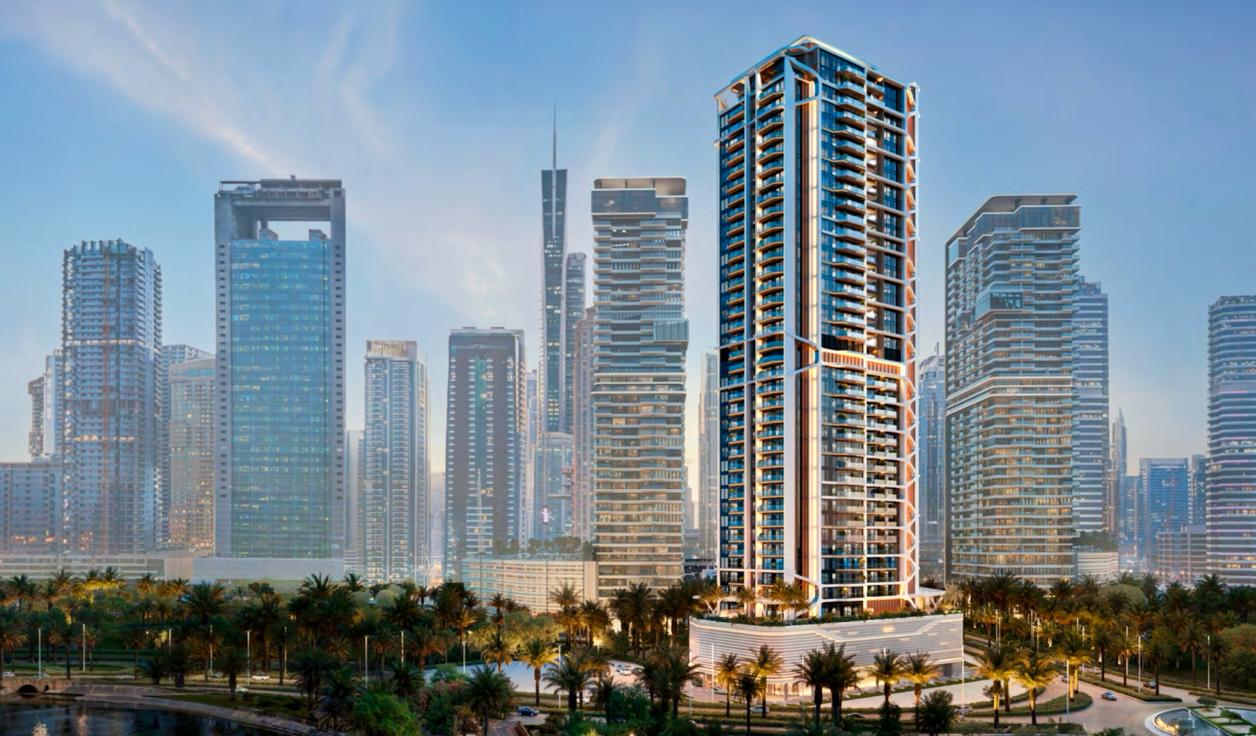
The Dubai property market demonstrated impressive resilience and dynamic growth in Q2 2025, cementing its position as one of the most attractive destinations for investors and lifestyle-minded buyers. Total sales value soared 46% year-on-year to reach AED 151.8 billion, while transaction volume increased by 25% to 50,485 units. This upswing was seen even amid regional unrest in June, which, according to a report from Betterhomes, underscored Dubai’s status as a safe and stable place to invest. Apartments continued to dominate the market, accounting for 80% of all transactions and generating AED 81 billion, with new (off-plan) sales up 30% quarter-on-quarter, outpacing the average price per square foot of resale properties.
The Dubai property market continues to show interesting and sometimes contrasting trends. In the off-plan segment, Jumeirah Village Circle (JVC) leads the way, accounting for an impressive 12.2% of total sales, followed by the booming Business Bay districts with 6.4% and Dubai Residence Complex with 5.3%, highlighting the strong demand for new builds in these locations.
At the same time, the villa segment is experiencing a period of rapid price growth, with villa prices in Dubai soaring by a whopping 90% from their recorded lows since the pandemic. However, sales dynamics within this segment are uneven. The existing villa and townhouse market showed strong growth, increasing by 66% year-on-year and by 23% quarter-on-quarter, demonstrating strong demand for ready-to-build properties.
In contrast, off-plan villa sales experienced a significant decline, down 23% year-on-year and by 46% quarter-on-quarter. This difference in dynamics may indicate a preference for completed properties by buyers in the context of rapidly rising prices and limited supply, or a reallocation of investments. It is worth noting that the total volume of villas and townhouses sales on the resale market reached an impressive AED 62.4 billion, which is 80% more than in the previous quarter of 2024 (AED 34.6 billion), confirming the exceptional activity in this segment.
The Dubai property market enters Q3 2025 with a noticeable revival, as evidenced by a significant volume of new supply and continued price growth in all segments. According to Christopher Sina, Sales Director at Betterhomes, in the first half of 2025, about 20,000 new units were delivered, and by the end of the year, another 70,000 units are expected to be delivered, making this a particularly interesting period for the market. Overall, the volume of new residential units planned for 2026 and 2027 exceeds 200,000. Jumeirah Village Circle led the way in terms of delivery in the first half of 2025, accounting for 20% of the total (more than 4,130 units), followed by Sobha Hartland (2,200 units) and Mohammed Bin Rashid City (1,600 units).
The Dubai property market continues to show interesting and sometimes contrasting trends. In the off-plan segment, Jumeirah Village Circle (JVC) leads the way, accounting for an impressive 12.2% of total sales, followed by the booming Business Bay districts with 6.4% and Dubai Residence Complex with 5.3%, highlighting the strong demand for new builds in these locations.
At the same time, the villa segment is experiencing a period of rapid price growth, with villa prices in Dubai soaring by a whopping 90% from their recorded lows since the pandemic. However, sales dynamics within this segment are uneven. The existing villa and townhouse market showed strong growth, increasing by 66% year-on-year and by 23% quarter-on-quarter, demonstrating strong demand for ready-to-build properties.
In contrast, off-plan villa sales experienced a significant decline, down 23% year-on-year and by 46% quarter-on-quarter. This difference in dynamics may indicate a preference for completed properties by buyers in the context of rapidly rising prices and limited supply, or a reallocation of investments. It is worth noting that the total volume of villas and townhouses sales on the resale market reached an impressive AED 62.4 billion, which is 80% more than in the previous quarter of 2024 (AED 34.6 billion), confirming the exceptional activity in this segment.
The Dubai property market enters Q3 2025 with a noticeable revival, as evidenced by a significant volume of new supply and continued price growth in all segments. According to Christopher Sina, Sales Director at Betterhomes, in the first half of 2025, about 20,000 new units were delivered, and by the end of the year, another 70,000 units are expected to be delivered, making this a particularly interesting period for the market. Overall, the volume of new residential units planned for 2026 and 2027 exceeds 200,000. Jumeirah Village Circle led the way in terms of delivery in the first half of 2025, accounting for 20% of the total (more than 4,130 units), followed by Sobha Hartland (2,200 units) and Mohammed Bin Rashid City (1,600 units).
Despite growing supply, property prices continue to show strong growth, with the average price reaching AED 1,582 psf, up 6% from H2 2024 and a whopping 90% above the pandemic low of AED 833. Off-plan prices rebounded to AED 2,023 psf in Q2 2025, up 12.5% since the start of 2023. Meanwhile, resale prices have shown even more robust growth, rising 23% over the same period to AED 1,599. The villas and townhouses segment also demonstrated positive dynamics, with prices in the resale market reaching AED 1,557 per square foot (up 9% quarter-on-quarter) and off-plan prices reaching AED 1,368 per square foot (up 4%). Demand for off-plan properties remains strong, especially in areas such as River Valley, which accounted for 29.7% of villas and townhouses transactions, and EMAAR South with 15.5%. In the off-plan apartments segment, 49% of transactions were for four-bedroom properties.
The Dubai property market saw significant new delivery in H1 2025, especially in the villas and townhouses segment. Over 1,300 villas and 3,000 townhouses were delivered during this period, which already exceeds half of the total number of deliveries for the whole of 2024. The pace of construction is expected to continue or even accelerate in H2 2025, with an additional 3,800 villas and 9,000 townhouses expected to be delivered, demonstrating the market’s continued momentum and commitment to meet the growing demand for spacious homes.
Dubai’s luxury property market has reached unprecedented heights, recording record activity. There were 1,417 transactions valued at AED 15 million or more, representing an impressive 67% growth quarter-on-quarter and 113% year-on-year. The resale luxury market was particularly strong, with 1,153 transactions completed. This was 4.5 times higher than off-plan sales in the same quarter and 137% higher than the previous year, highlighting buyers’ preference for off-plan properties. In the first half of 2025 alone, the volume of luxury property transactions reached 2,268, representing 87% of the total sales for the whole of 2024 and almost double the 2022 figures.
Dubai’s rental market is also showing resilience and stable demand. In Q2 2025, 107,830 leases were signed, up 2% year-on-year. Overall, Dubai registered 236,315 leases in H1 2025, compared to 240,270 in the same period of 2024. The share of renewals of existing leases was stable at 60-65% of the total, while the share of new leases was maintained at around 40%. According to Rupert Simmonds, Director of Rentals at Betterhomes, “Rents for properties on Betterhomes increased by 33% compared to the previous quarter, demonstrating strong demand in the Dubai rental market. Demand for villas and townhouses increased significantly, by 30% and 98% respectively, reflecting the growing need for spacious, family-friendly homes.”
The Dubai property market saw significant new delivery in H1 2025, especially in the villas and townhouses segment. Over 1,300 villas and 3,000 townhouses were delivered during this period, which already exceeds half of the total number of deliveries for the whole of 2024. The pace of construction is expected to continue or even accelerate in H2 2025, with an additional 3,800 villas and 9,000 townhouses expected to be delivered, demonstrating the market’s continued momentum and commitment to meet the growing demand for spacious homes.
Dubai’s luxury property market has reached unprecedented heights, recording record activity. There were 1,417 transactions valued at AED 15 million or more, representing an impressive 67% growth quarter-on-quarter and 113% year-on-year. The resale luxury market was particularly strong, with 1,153 transactions completed. This was 4.5 times higher than off-plan sales in the same quarter and 137% higher than the previous year, highlighting buyers’ preference for off-plan properties. In the first half of 2025 alone, the volume of luxury property transactions reached 2,268, representing 87% of the total sales for the whole of 2024 and almost double the 2022 figures.
Dubai’s rental market is also showing resilience and stable demand. In Q2 2025, 107,830 leases were signed, up 2% year-on-year. Overall, Dubai registered 236,315 leases in H1 2025, compared to 240,270 in the same period of 2024. The share of renewals of existing leases was stable at 60-65% of the total, while the share of new leases was maintained at around 40%. According to Rupert Simmonds, Director of Rentals at Betterhomes, “Rents for properties on Betterhomes increased by 33% compared to the previous quarter, demonstrating strong demand in the Dubai rental market. Demand for villas and townhouses increased significantly, by 30% and 98% respectively, reflecting the growing need for spacious, family-friendly homes.”
Recent data from Betterhomes clearly shows a significant change in the composition of foreign property buyers in Dubai, with the UK now taking the top spot, ahead of India with an impressive 56% growth compared to the previous quarter. India and Pakistan maintain their positions in the top three, while Poland has confidently entered the top five. Notably, Russian buyer activity has noticeably slowed, dropping them out of the top ten, while Ireland debuted in sixth place, confirming the growing interest of European investors in the Dubai market. These changes are not coincidental and are closely linked to the robust economic growth of the UAE, the second-largest economy in the GCC, which recorded GDP growth of 3.8% in 2024, with an increase forecast to 4.2% in 2025 and 5% by 2026.
At the same time, Dubai continues to grow strongly, increasing its population from 3.8 million to 4.1 million and is now home to a third of the UAE’s total population. This population boom is accompanied by growth in the education sector, with private school enrolments up 6% and international students at universities up an impressive 29%. The property market is also being strongly supported by a thriving tourism sector, with visitor numbers up 7% year-on-year (peaking at 22.7% in April) and hotel occupancy rates reaching 84% in the first four months of the year, up 7% on last year. The combination of economic stability, demographic growth, a growing education infrastructure and booming tourism is cementing Dubai’s appeal as a global hub to live, work and invest, attracting an increasingly diverse cross-section of international buyers. Betterhomes recorded strong growth in both sales and rentals, highlighting the market’s momentum in Q3. The number of sales transactions increased by 17% compared to the previous quarter, with buyers particularly interested in townhouses, where the volume of transactions more than doubled. This led to a significant increase in the average sale price, which increased by 28% compared to the same period last year, highlighting the strengthening position of sellers in the market.
In the rental market, Betterhomes also showed impressive results, with the number of transactions more than doubling compared to last year. A notable trend was the dominance of short payment structures, with almost 60% of new leases being concluded with one or four cheques, indicating a change in tenant preferences and the market adapting to more flexible terms.
Commenting on the current situation, Harding noted that the fundamentals of the property market remain strong. He highlighted steady population growth and the continued expansion of infrastructure as key factors supporting demand. Despite the increase in supply, demand continues to outpace it in most regions. Harding's view of the future includes increased negotiation, more realistic pricing and increased competition, which he believes are healthy signs of a maturing market.
At the same time, Dubai continues to grow strongly, increasing its population from 3.8 million to 4.1 million and is now home to a third of the UAE’s total population. This population boom is accompanied by growth in the education sector, with private school enrolments up 6% and international students at universities up an impressive 29%. The property market is also being strongly supported by a thriving tourism sector, with visitor numbers up 7% year-on-year (peaking at 22.7% in April) and hotel occupancy rates reaching 84% in the first four months of the year, up 7% on last year. The combination of economic stability, demographic growth, a growing education infrastructure and booming tourism is cementing Dubai’s appeal as a global hub to live, work and invest, attracting an increasingly diverse cross-section of international buyers. Betterhomes recorded strong growth in both sales and rentals, highlighting the market’s momentum in Q3. The number of sales transactions increased by 17% compared to the previous quarter, with buyers particularly interested in townhouses, where the volume of transactions more than doubled. This led to a significant increase in the average sale price, which increased by 28% compared to the same period last year, highlighting the strengthening position of sellers in the market.
In the rental market, Betterhomes also showed impressive results, with the number of transactions more than doubling compared to last year. A notable trend was the dominance of short payment structures, with almost 60% of new leases being concluded with one or four cheques, indicating a change in tenant preferences and the market adapting to more flexible terms.
Commenting on the current situation, Harding noted that the fundamentals of the property market remain strong. He highlighted steady population growth and the continued expansion of infrastructure as key factors supporting demand. Despite the increase in supply, demand continues to outpace it in most regions. Harding's view of the future includes increased negotiation, more realistic pricing and increased competition, which he believes are healthy signs of a maturing market.