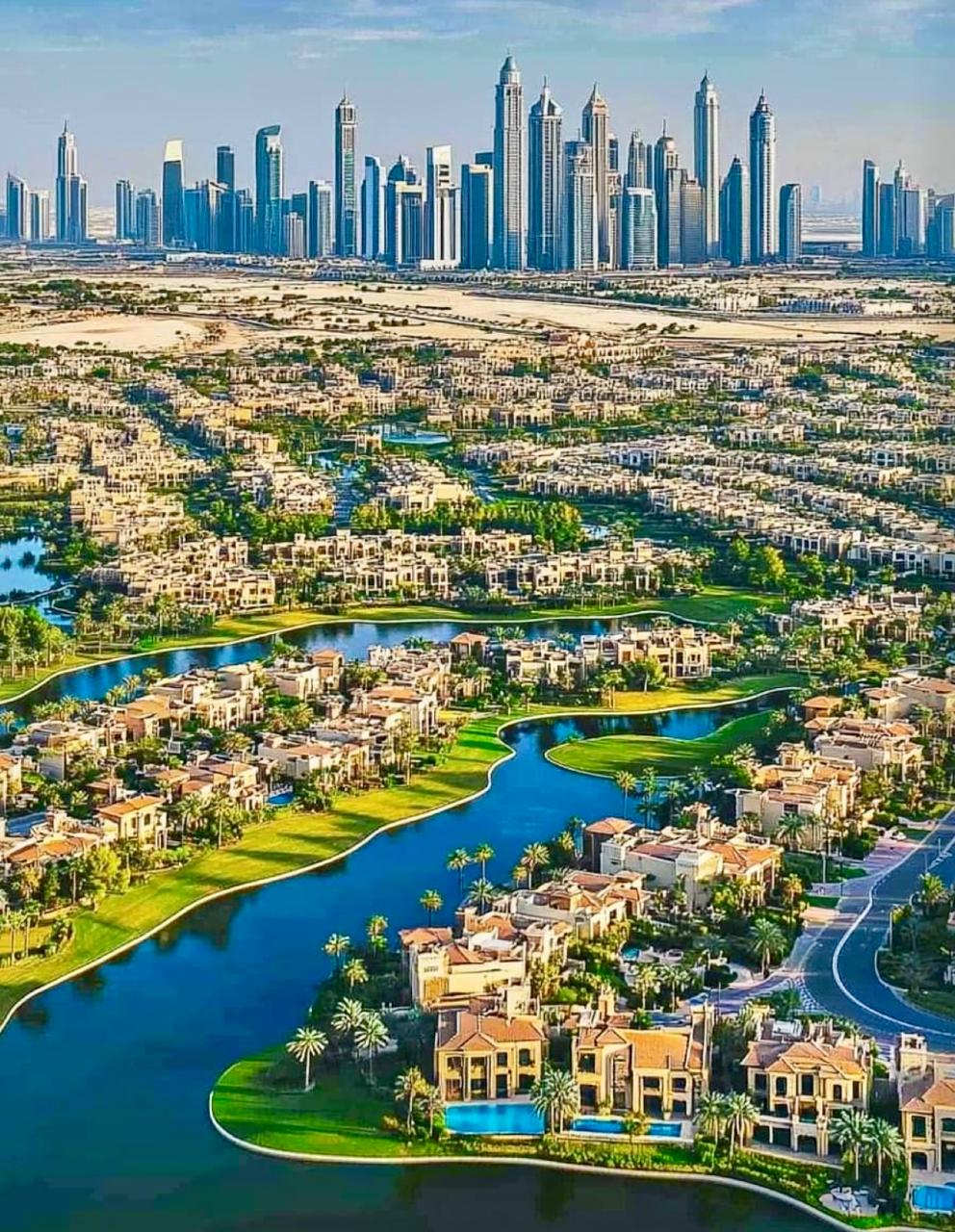
Pre-sales in Dubai's residential real estate market are showing consistently strong growth. According to Valustrat, by September 2025, total off-plan sales showed an impressive 39% year-on-year increase. This contrasts with a 7% decline in the completed housing segment, highlighting investors' preference for properties in the early stages of construction.
Furthermore, off-plan prices continue to rise, increasing by 5% since the beginning of 2025. Meanwhile, completed housing prices are stabilizing. This scenario is largely driven by the proactive policies of the UAE and Dubai governments aimed at stimulating the investment attractiveness of the market through reforms, which in turn is fueling demand for real estate.
In its latest report, S&P Global Ratings predicts that the bulk of new residential supply scheduled for delivery between 2025 and 2027 will be quickly absorbed by Dubai's current high population growth rate. This reduces the likelihood of oversupply in the market.
However, despite the buoyancy, S&P forecasts a slowdown in demand and price growth over the next 12-24 months. Experts attribute this to the expected significant volume of new developments coming online during this period. JLL estimates that by 2027, the supply of new residential units in Dubai will grow by 16% compared to current pre-sales levels, which could limit further price growth. Actual supply growth could be even higher, given the potential launch of new projects in the coming quarters.
Nevertheless, S&P does not expect a significant decline in prices after 2027. This forecast is based on a number of factors, including Dubai's robust population growth, which was approximately 5.7% in 2024 and is projected to continue growing annually by 3.6% to 4% between 2025 and 2027, according to the agency. This population growth is being driven by government initiatives aimed at attracting expatriates, who are expected to actively purchase new homes.
Furthermore, off-plan prices continue to rise, increasing by 5% since the beginning of 2025. Meanwhile, completed housing prices are stabilizing. This scenario is largely driven by the proactive policies of the UAE and Dubai governments aimed at stimulating the investment attractiveness of the market through reforms, which in turn is fueling demand for real estate.
In its latest report, S&P Global Ratings predicts that the bulk of new residential supply scheduled for delivery between 2025 and 2027 will be quickly absorbed by Dubai's current high population growth rate. This reduces the likelihood of oversupply in the market.
However, despite the buoyancy, S&P forecasts a slowdown in demand and price growth over the next 12-24 months. Experts attribute this to the expected significant volume of new developments coming online during this period. JLL estimates that by 2027, the supply of new residential units in Dubai will grow by 16% compared to current pre-sales levels, which could limit further price growth. Actual supply growth could be even higher, given the potential launch of new projects in the coming quarters.
Nevertheless, S&P does not expect a significant decline in prices after 2027. This forecast is based on a number of factors, including Dubai's robust population growth, which was approximately 5.7% in 2024 and is projected to continue growing annually by 3.6% to 4% between 2025 and 2027, according to the agency. This population growth is being driven by government initiatives aimed at attracting expatriates, who are expected to actively purchase new homes.
The villa segment is expected to support the overall market, as supply is unlikely to keep up with demand despite new supply.
Deliveries are likely to be delayed, which is not uncommon in the real estate market, which will slow supply growth and support prices, at least in the short term.
The market may also benefit from the gambling industry, which is expected to launch in neighboring Ras Al Khaimah in 2027, given its proximity to Dubai, the UAE's leading tourist destination.
The Duwai real estate market is showing distinct dynamics depending on price segment and housing type.
The mid-price apartment segment remains the most active, attracting buyers due to its affordability and the large number of new projects targeting young professionals and first-time homebuyers. However, the rapid growth of new supply in this segment is having a restraining effect on growth. Square foot prices have stabilized, and developers, seeking to maintain affordable prices and attract a wider audience, are offering apartments with smaller square footage. This strategy is stimulating sales, but also increases the risk of oversupply in areas with a high concentration of new high-rise buildings completed around the same time.
Unlike apartments, the villa and townhouse market is experiencing increased demand. Families and affluent residents seeking more spacious living are actively investing in this segment. S&P analysts note that villa and townhouse prices are growing faster and more consistently than apartments, and demand remains unsaturated even with new projects. This ensures the stability of this segment.
The upper end of the market, including luxury and ultra-high-end homes, continues to demonstrate impressive results. Dubai has set world records for the number of major transactions, attracting a significant amount of international capital. A combination of tax incentives, political stability, and an attractive lifestyle has helped differentiate this segment from the overall market cycle. Branded residential buildings and exclusive properties enjoy consistent and high demand.
Deliveries are likely to be delayed, which is not uncommon in the real estate market, which will slow supply growth and support prices, at least in the short term.
The market may also benefit from the gambling industry, which is expected to launch in neighboring Ras Al Khaimah in 2027, given its proximity to Dubai, the UAE's leading tourist destination.
The Duwai real estate market is showing distinct dynamics depending on price segment and housing type.
The mid-price apartment segment remains the most active, attracting buyers due to its affordability and the large number of new projects targeting young professionals and first-time homebuyers. However, the rapid growth of new supply in this segment is having a restraining effect on growth. Square foot prices have stabilized, and developers, seeking to maintain affordable prices and attract a wider audience, are offering apartments with smaller square footage. This strategy is stimulating sales, but also increases the risk of oversupply in areas with a high concentration of new high-rise buildings completed around the same time.
Unlike apartments, the villa and townhouse market is experiencing increased demand. Families and affluent residents seeking more spacious living are actively investing in this segment. S&P analysts note that villa and townhouse prices are growing faster and more consistently than apartments, and demand remains unsaturated even with new projects. This ensures the stability of this segment.
The upper end of the market, including luxury and ultra-high-end homes, continues to demonstrate impressive results. Dubai has set world records for the number of major transactions, attracting a significant amount of international capital. A combination of tax incentives, political stability, and an attractive lifestyle has helped differentiate this segment from the overall market cycle. Branded residential buildings and exclusive properties enjoy consistent and high demand.
The Dubai real estate market is demonstrating impressive resilience and attractiveness, even amid global economic fluctuations. Although Dubai property prices have risen, they remain more affordable compared to other leading global financial centers. A further boost is the weakening US dollar, making the UAE dirham (AED), to which it is pegged, more attractive to international buyers and renters. This trend is confirmed by the increasing share of foreign buyers, who now account for approximately 50% of all new buyers.
Of particular interest is the off-plan property segment, which is demonstrating higher demand than completed homes. This is due to several key factors. Firstly, payment plans offered by developers are more flexible and budget-friendly. Secondly, developers are actively investing in modern infrastructure, high-quality finishing materials, and attractive design to attract buyers who are prepared to wait. Thirdly, off-plan properties are attractive to affluent investors who are considering purchasing multiple properties simultaneously (bulk deals).
It's worth noting that despite the advantages of purchasing off-plan, completed properties also remain attractive, offering lower prices per square foot, which were approximately 20% lower as of Q3 2025.
However, the growing role of luxury brands in the Dubai real estate market is also noteworthy. International companies from various sectors, including hospitality, fashion, automotive, and luxury watchmaking, are actively integrating their brands and reputations into the residential segment, enhancing its prestige and appeal. This trend, according to experts, has been observed over the past two years, attracting an increasing number of wealthy individuals choosing Dubai for second residences or investment properties.
These factors, coupled with continued high demand for office space, contribute to Dubai's leading position as the most dynamic real estate market in the United Arab Emirates. According to S&P, Dubai will maintain its position as the leader among the UAE's most dynamic real estate markets, driven by a steady influx of foreign investment and strong demand for luxury housing. However, it should be noted that the significant amount of unfinished construction could constrain price growth in the mid-priced apartment segment. Abu Dhabi, on the other hand, is demonstrating more stable growth dynamics. Government projects and infrastructure investments are attracting long-term residents, while a focus on the end consumer makes the market less susceptible to fluctuations. According to JLL, in the first half of 2025, average prices for apartments and villas in Abu Dhabi increased by 14.4% and 11.1%, respectively.
Sharjah and Ajman are becoming hubs for affordable real estate, seeing a sharp increase in transaction values. This is due to buyers seeking more affordable alternatives to Dubai actively considering these neighboring emirates. Ras Al Khaimah's housing market, meanwhile, is expected to boom thanks to tourism-focused projects and the construction of branded resorts, positioning the emirate as an attractive holiday and second-home destination. Some projects under construction are seeing double-digit price growth. The residential markets in Umm Al Quwain and Fujairah are likely to remain smaller, but have the potential for gradual growth as infrastructure development and tourism initiatives increase their visibility.
Of particular interest is the off-plan property segment, which is demonstrating higher demand than completed homes. This is due to several key factors. Firstly, payment plans offered by developers are more flexible and budget-friendly. Secondly, developers are actively investing in modern infrastructure, high-quality finishing materials, and attractive design to attract buyers who are prepared to wait. Thirdly, off-plan properties are attractive to affluent investors who are considering purchasing multiple properties simultaneously (bulk deals).
It's worth noting that despite the advantages of purchasing off-plan, completed properties also remain attractive, offering lower prices per square foot, which were approximately 20% lower as of Q3 2025.
However, the growing role of luxury brands in the Dubai real estate market is also noteworthy. International companies from various sectors, including hospitality, fashion, automotive, and luxury watchmaking, are actively integrating their brands and reputations into the residential segment, enhancing its prestige and appeal. This trend, according to experts, has been observed over the past two years, attracting an increasing number of wealthy individuals choosing Dubai for second residences or investment properties.
These factors, coupled with continued high demand for office space, contribute to Dubai's leading position as the most dynamic real estate market in the United Arab Emirates. According to S&P, Dubai will maintain its position as the leader among the UAE's most dynamic real estate markets, driven by a steady influx of foreign investment and strong demand for luxury housing. However, it should be noted that the significant amount of unfinished construction could constrain price growth in the mid-priced apartment segment. Abu Dhabi, on the other hand, is demonstrating more stable growth dynamics. Government projects and infrastructure investments are attracting long-term residents, while a focus on the end consumer makes the market less susceptible to fluctuations. According to JLL, in the first half of 2025, average prices for apartments and villas in Abu Dhabi increased by 14.4% and 11.1%, respectively.
Sharjah and Ajman are becoming hubs for affordable real estate, seeing a sharp increase in transaction values. This is due to buyers seeking more affordable alternatives to Dubai actively considering these neighboring emirates. Ras Al Khaimah's housing market, meanwhile, is expected to boom thanks to tourism-focused projects and the construction of branded resorts, positioning the emirate as an attractive holiday and second-home destination. Some projects under construction are seeing double-digit price growth. The residential markets in Umm Al Quwain and Fujairah are likely to remain smaller, but have the potential for gradual growth as infrastructure development and tourism initiatives increase their visibility.