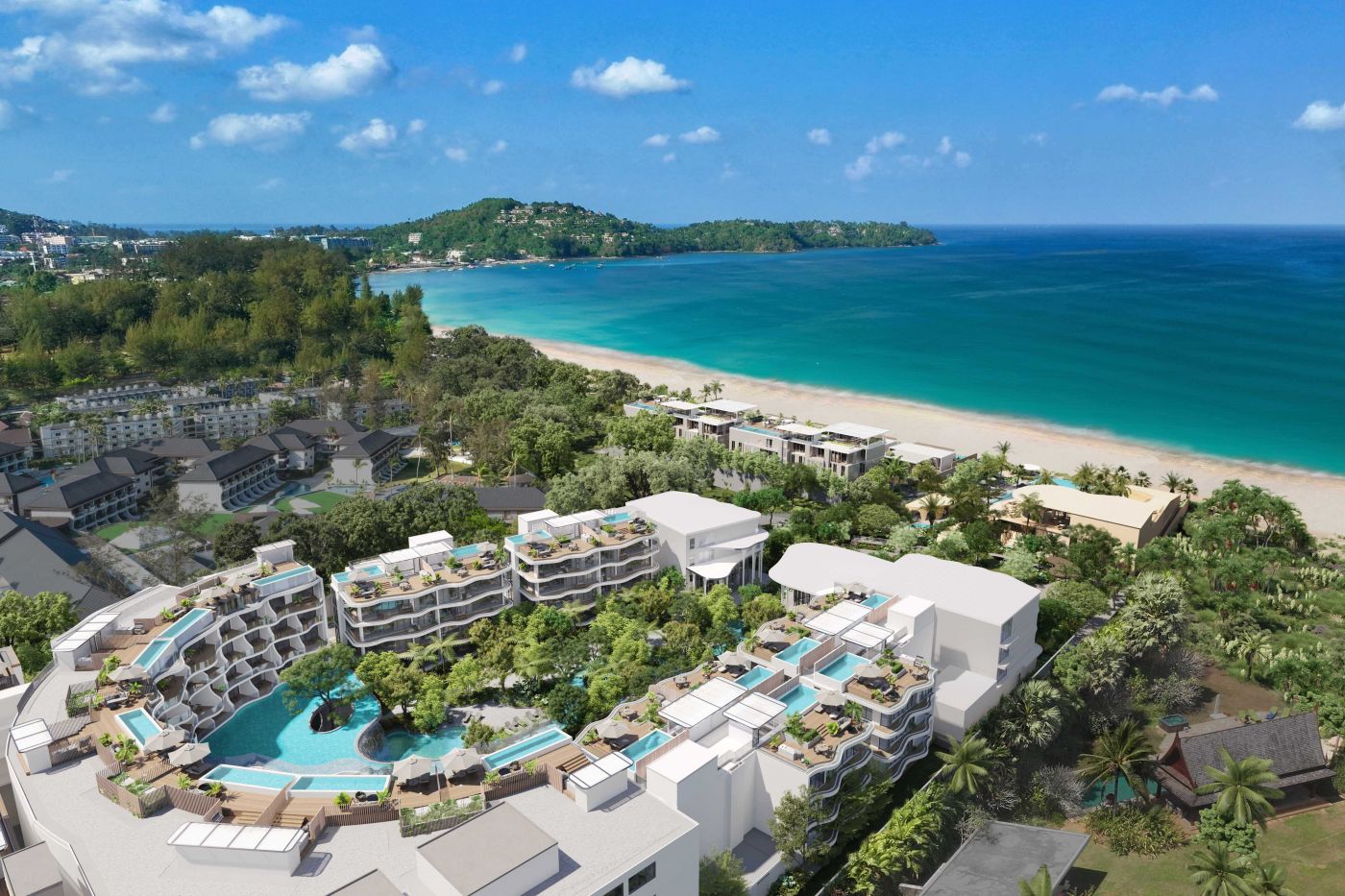
Despite a relatively weak first half of the year and the continued absence of Chinese buyers, analysts predict that Phuket’s residential market will be one of the busiest in terms of new listings and sales in 2025. According to Chotika Tungsirisurp of CBRE (Thailand), the number of new condominiums and villas is expected to increase significantly, particularly in the final quarter, which should spur more transactions as Phuket enters a more active market phase.
While new listings in the first half of 2025 (3,711 condominiums and 397 villas) were down from the previous year, sales volumes remained strong. This decline followed a record year in 2024 and was not unexpected, with current figures significantly above historical averages. Most new condo developments are concentrated in the southern and southwestern coastal areas, where greater land availability means prices are 15-20% lower than in the central west coast.
CBRE says Phuket’s villa market is facing increasing competition due to a steady influx of new supply, leading to a decline in new project launches. The northwest coast has become a key development area for villas, primarily targeting the mid-price segment (15-35 million baht), due to more attractive land prices compared to the significantly inflated central west regions such as Bang Tao and Cherng Talay.
In contrast, condo sales showed a robust 21% year-on-year growth, with 3,633 units sold in the first half of the year, largely driven by foreign buyers attracted by the affordability of their offerings. Prakaiphet Michosarn, head of Phuket property sales at CBRE (Thailand), noted that entry-level condos are available for under 3 million baht, offering a more attractive price point and ownership structure than significantly more expensive villas. Capitalizing on this trend, SET-listed developer Sansiri has become the market leader, achieving pre-sales of 1 billion baht in Phuket in the first half of 2025, mainly due to its condo projects.
A decline in foreign tourist numbers since late last year has impacted condo sales in Phuket, but demand from foreign buyers on the island has remained higher than in Bangkok, highlighting its continued appeal. Uthai Uthaisangsuk, president of Sansiri, said he expects the upcoming high season from October to March to boost sales significantly.
However, villa sales in the first half of 2025 recorded a 21.9% year-on-year decline, which is attributed to both already satisfied demand and the typical slowdown in the off-season, as well as the fact that villas, being more expensive and aimed at end users, have a longer purchase decision cycle and developers are avoiding speculative construction. Despite the overall slowdown in the first half of the year, the Phuket market has attracted new major developers from Bangkok, such as Land & Houses, Ananda Development and AssetWise. These companies successfully target both Thai buyers interested in second homes or investments, as well as foreign buyers. In an increasingly competitive environment, developers are actively adjusting their projects in an effort to offer higher value, with successful projects providing the optimal combination of quality, location and price, allowing established players to maintain their leading positions.
While new listings in the first half of 2025 (3,711 condominiums and 397 villas) were down from the previous year, sales volumes remained strong. This decline followed a record year in 2024 and was not unexpected, with current figures significantly above historical averages. Most new condo developments are concentrated in the southern and southwestern coastal areas, where greater land availability means prices are 15-20% lower than in the central west coast.
CBRE says Phuket’s villa market is facing increasing competition due to a steady influx of new supply, leading to a decline in new project launches. The northwest coast has become a key development area for villas, primarily targeting the mid-price segment (15-35 million baht), due to more attractive land prices compared to the significantly inflated central west regions such as Bang Tao and Cherng Talay.
In contrast, condo sales showed a robust 21% year-on-year growth, with 3,633 units sold in the first half of the year, largely driven by foreign buyers attracted by the affordability of their offerings. Prakaiphet Michosarn, head of Phuket property sales at CBRE (Thailand), noted that entry-level condos are available for under 3 million baht, offering a more attractive price point and ownership structure than significantly more expensive villas. Capitalizing on this trend, SET-listed developer Sansiri has become the market leader, achieving pre-sales of 1 billion baht in Phuket in the first half of 2025, mainly due to its condo projects.
A decline in foreign tourist numbers since late last year has impacted condo sales in Phuket, but demand from foreign buyers on the island has remained higher than in Bangkok, highlighting its continued appeal. Uthai Uthaisangsuk, president of Sansiri, said he expects the upcoming high season from October to March to boost sales significantly.
However, villa sales in the first half of 2025 recorded a 21.9% year-on-year decline, which is attributed to both already satisfied demand and the typical slowdown in the off-season, as well as the fact that villas, being more expensive and aimed at end users, have a longer purchase decision cycle and developers are avoiding speculative construction. Despite the overall slowdown in the first half of the year, the Phuket market has attracted new major developers from Bangkok, such as Land & Houses, Ananda Development and AssetWise. These companies successfully target both Thai buyers interested in second homes or investments, as well as foreign buyers. In an increasingly competitive environment, developers are actively adjusting their projects in an effort to offer higher value, with successful projects providing the optimal combination of quality, location and price, allowing established players to maintain their leading positions.
Ms Prakaipet outlined strategic adjustments for the Phuket property market, noting that previously launched villa projects that failed to meet sales targets may be renegotiated. This may involve downsizing units for more competitive prices or converting them into condominium projects, demonstrating the adaptability of the market. Despite these adjustments, the top nationalities of buyers have remained stable over the years, with Russians, Thais and Europeans leading the way, demonstrating the broad appeal of the market.
Phuket is increasingly positioned as an attractive second home, retirement, long-term residence destination for tourists and remote working expats. This trend, in turn, is attracting investors, especially Thais seeking properties for flexible use and rental income potential, as well as those interested in high yield prospects and long-term capital appreciation.
However, despite other positive trends, Chinese buyers have yet to return to pre-pandemic levels. Ms Chotika stressed that “the revival of the Chinese tourism market is a key prerequisite for the resumption of property purchases in China.” She noted that in the first half of 2025, the number of Chinese tourists to Thailand fell by 31.2% compared to the same period last year, while the total number of foreign tourists fell by 4.7% to 16.7 million. Interestingly, against this backdrop, Phuket Airport recorded a 5.6% increase in passenger traffic, reaching 2.76 million. However, uncertainty remains, and “it is difficult to predict when the number of Chinese tourists will return to previous levels,” she concluded.
Phuket is increasingly positioned as an attractive second home, retirement, long-term residence destination for tourists and remote working expats. This trend, in turn, is attracting investors, especially Thais seeking properties for flexible use and rental income potential, as well as those interested in high yield prospects and long-term capital appreciation.
However, despite other positive trends, Chinese buyers have yet to return to pre-pandemic levels. Ms Chotika stressed that “the revival of the Chinese tourism market is a key prerequisite for the resumption of property purchases in China.” She noted that in the first half of 2025, the number of Chinese tourists to Thailand fell by 31.2% compared to the same period last year, while the total number of foreign tourists fell by 4.7% to 16.7 million. Interestingly, against this backdrop, Phuket Airport recorded a 5.6% increase in passenger traffic, reaching 2.76 million. However, uncertainty remains, and “it is difficult to predict when the number of Chinese tourists will return to previous levels,” she concluded.